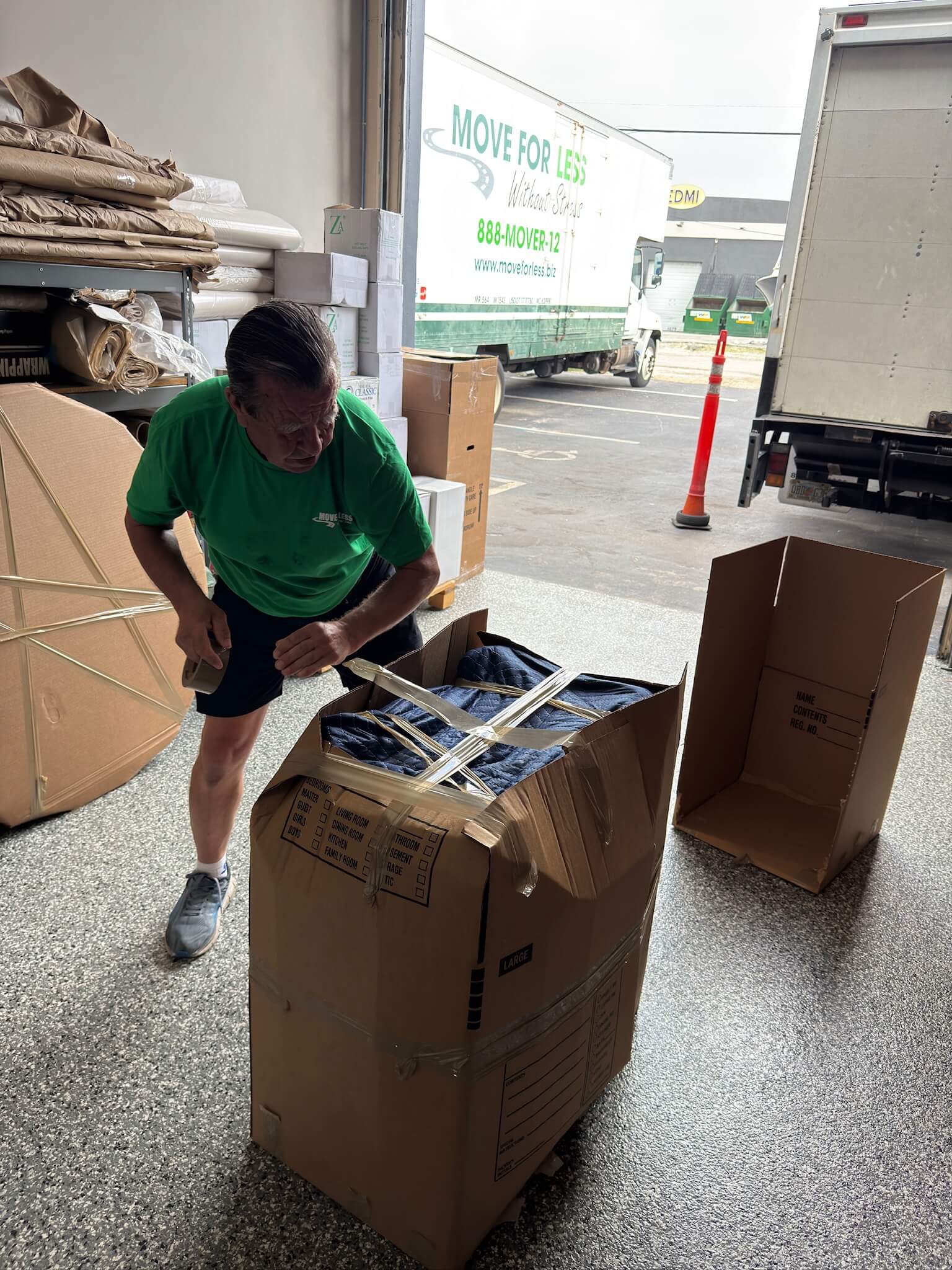
Moving from Miami to Los Angeles is the longest route we run. It is roughly 2,700 miles, with the load travelling west on I-10 through the Gulf states, Texas and the Southwest before it reaches California. Federal rules classify anything over 450 miles as a long haul, and this is that many times over, which changes how the move is packed, priced and scheduled. We have been running coast-to-coast moves since 2007. Request a free quote to get started.

What the Coast-to-Coast Run Actually Involves

The corridor runs north out of Miami to pick up I-10, then west through Mobile, New Orleans, Houston, San Antonio, El Paso, Tucson and Phoenix before I-10 ends at the Pacific. It is around 40 hours of driving time, and with federal driving-hour limits that becomes a transit measured in days rather than hours.
On a haul this long the load is built once and not opened again until delivery. That makes how the truck is packed the single biggest factor in whether your furniture arrives in the condition it left. Padding is applied piece by piece rather than to a stacked wall of furniture, glass shelves and removable stone tops travel separately, and anything with a finished surface is wrapped before it is loaded rather than after.

Heat, the Desert Leg and What Not to Ship

The middle of this route crosses Arizona, and in summer that stretch is genuinely extreme. Phoenix and Yuma both average a July high of around 106 degrees, and July 2026 ran above 108 in both cities.
That matters for a short and specific list of belongings. Candles, vinyl records, electronics, musical instruments, cosmetics and some artwork do not travel well through sustained heat in a trailer. If you are moving between June and August, flag those items when you book so they can be loaded differently, or decide to carry them with you. On the Miami end, Atlantic hurricane season runs June 1 through November 30, which is the other half of the scheduling picture on this corridor.

What a Miami to Los Angeles Move Costs

There is no flat rate for a move this long. The figure is built from the weight of what you are shipping, the mileage and the services you want, and it goes in writing before anything is loaded. This is the route where editing your inventory pays back the most. Every item you do not take is paid for twice on a 2,700-mile haul, once in labor and once in truck space, so a hard decision about the spare mattress or the old desk has a real effect on the figure. Shuttle service and long carries are the other two variables, and both are common at Los Angeles addresses. We put all of it in writing before anything is loaded. Request a free quote once you know roughly what is coming, and the inventory will do more to shape the number than anything else.

California Gives You 20 Days, Not 30

California is stricter than most states on new-resident deadlines, and Florida arrivals routinely miss them. You have 20 days from becoming a resident or bringing the vehicle into the state to register it with the California DMV. The license window is shorter still, because state vehicle code allows a new resident to drive on an out-of-state license for not more than 10 days after establishing residency, and you cannot drive for work on a Florida license at all.
Two extra steps exist in California that Florida has none of. Gasoline vehicles from model year 1976 onward need a smog certificate from a California station before they can be registered, and Florida runs no emissions program, so this will be new. You will also need a Verification of Vehicle form completed by a DMV employee, a law enforcement officer or a licensed California verifier. File on time even if the smog certificate or the title is still outstanding, because the penalties attach to the deadline rather than to the paperwork.