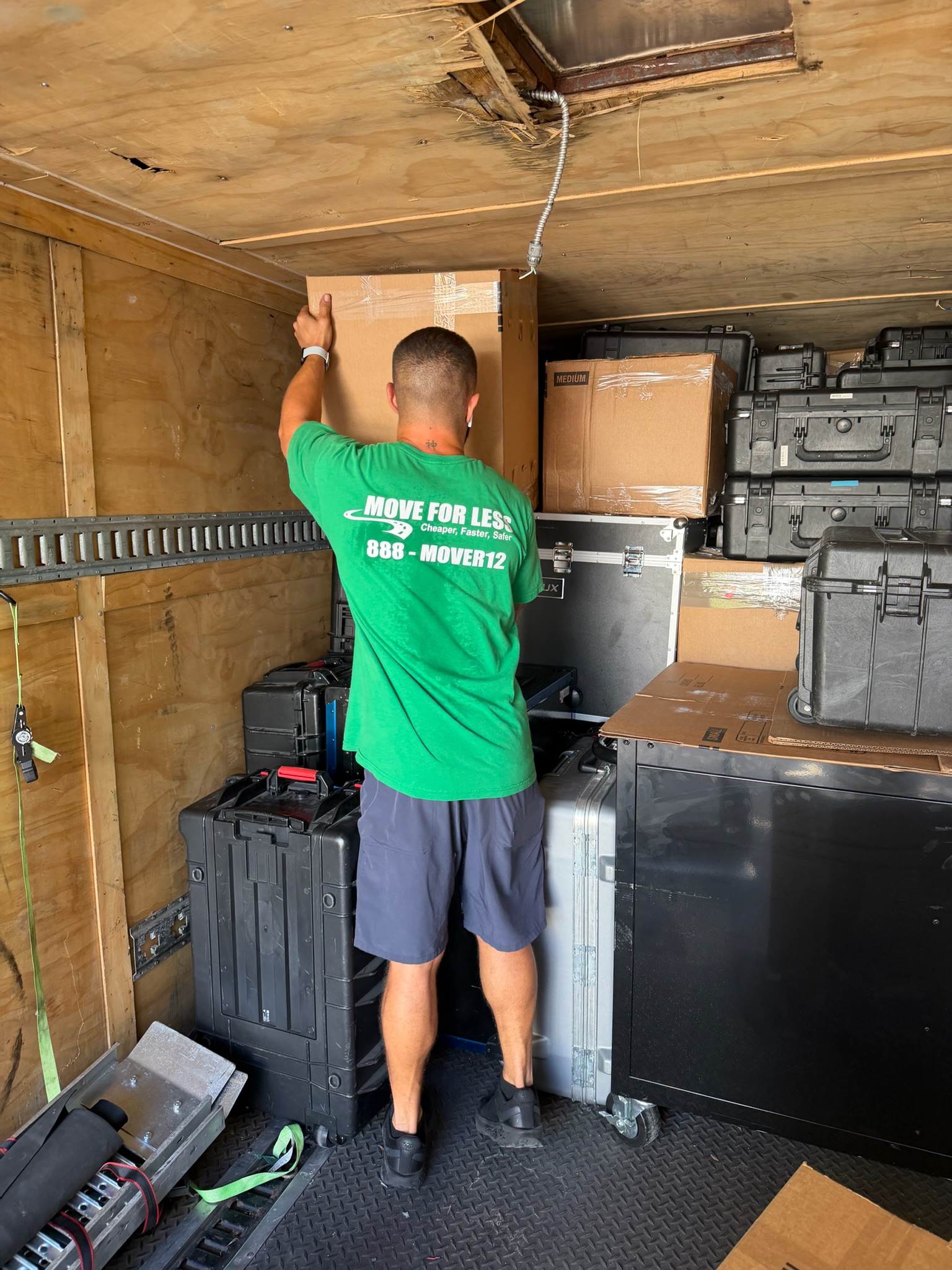


Moving from Miami to Orlando is an intrastate move, which sounds like a technicality and is not. It stays inside Florida, so it does not cross a state line and does not carry interstate paperwork, but at roughly 235 miles it is far too long to be billed by the hour like a local job. That combination trips people up, because it sits in a gap most moving company websites do not explain. We have been running this corridor since 2007. Request a free quote to get started.

What the Drive Actually Involves

The route is a straight run up Florida’s Turnpike, or I-95 to I-4 if the destination sits on the eastern side of Orlando. Either way it is around three and a half to four hours without traffic, and traffic is the variable. Leaving Miami-Dade at the wrong hour adds an hour before the truck is past Fort Lauderdale, and arriving into Orlando on I-4 during the afternoon adds another at the other end.

That determines whether the move runs one day or two. A small apartment loaded early can be unloaded in Orlando the same afternoon. A four-bedroom house cannot, and anyone promising a same-day unload on a full house has either planned a very long day or has not thought it through.

How Pricing Works on This Route

Miami to Orlando is priced as a long-distance move rather than hourly. A one to two bedroom move typically runs $2,500 to $5,000, and a three to four bedroom move $4,500 to $9,000 or more. The range is wide because the things that move it are real: how much you own, whether you pack yourself, access at both ends, and whether anything needs specialty handling.

Volume is the biggest lever. On an hourly local move, owning more furniture costs you time. Over 235 miles it costs you space on a truck, which is more expensive. This is the move where clearing out what you were never going to use again pays for itself.

Embalaje is the second. Partial packing runs $300 to $800 and a full home $800 to $2,500 or more. Packing your own boxes and leaving furniture, glass, artwork and mirrors to the crew is the middle path most people take here. If a quote you have been given elsewhere looks unusually low, we have written separately on what makes a quote change on moving day, and it is usually what has been left out.

What Changes When You Get There

Orlando is not a coastal city and the housing stock reflects that. Square footage per dollar is substantially better than Miami-Dade, garages are standard rather than a luxury, and single-family homes with yards are the default in a way they simply are not in Miami.

Where people land depends on what they are leaving Miami for. Lake Nona draws medical and tech workers and is newer than anything comparable down here. Winter Park is the walkable, older, tree-lined option and the closest thing to a Coral Gables equivalent. Dr Phillips and Windermere cover the larger family homes near the attractions corridor. Baldwin Park is the planned-community answer for people who want a shorter commute. Downtown Orlando and the Mills 50 district suit anyone who wants to stay urban.

Practically, the shifts are these. You will drive more and walk less, and I-4 becomes your I-95. You leave the coastal flood zone, though hurricanes still reach central Florida. And salt air stops eating your outdoor furniture, which quietly extends the life of anything metal on a balcony or patio.