

Designer furniture moving goes wrong in the disassembly, not the truck. An Italian sectional, a German wardrobe system or a stone-topped dining table is built around concealed hardware and tolerances that only work if the piece comes apart the way the manufacturer intended. Get that wrong and the damage is permanent and expensive. We have been moving designer and European furniture across Miami since 2007, and the work starts with identifying how a piece is built before anyone touches it. Request a free quote and send photographs of the pieces you are concerned about.

What This Service Covers

This is for households where a handful of pieces carry most of the risk and most of the replacement cost. Italian and German case goods, modular seating systems, lacquered and veneered panels, stone and glass tops, concealed cam and dowel hardware, wall-mounted systems that have to come off cleanly, and imported pieces where a replacement part means a lead time measured in months rather than days.

We plan those pieces individually and move the rest of the household through our standard residential moving service, which keeps the cost proportionate. Treating an entire home as a specialty job is how quotes get inflated without anything actually being safer.

Why European Pieces Need a Different Approach

Ordinary household furniture is designed to be assembled once. Designer and European furniture is frequently designed to be taken apart, but only in a specific order and only with the right tool, and the fixings are hidden because showing them would spoil the piece.

That creates three failure points. Concealed hardware gets forced by a crew that cannot find the release, which strips the fitting and leaves the piece loose forever. Modular sections get separated without being labeled, which turns reassembly into guesswork and leaves visible gaps in the alignment. And lacquered or high-gloss surfaces get wrapped in plastic directly, which traps moisture against the finish in a climate where that matters more than almost anywhere else in the country.

None of these show up on moving day. They show up a week later when something will not sit square.

Miami adds a fourth problem the rest of the country does not have to think about. Humidity here sits high most of the year, and a lacquered or veneered panel sealed inside plastic on a July afternoon is effectively in a sweatbox. Condensation forms against the finish, and on a high-gloss surface that can leave clouding that does not buff out. The same applies to leather, which needs to breathe rather than sit sealed. Wrapping matters as much for what it lets out as for what it keeps off.

How We Plan the Move Before Anything Is Wrapped

We ask for photographs before the date so the crew arrives with the right materials rather than the truck’s standard kit. Assembled pieces are photographed again on site before disassembly begins, because those photographs are what reassembly is checked against.

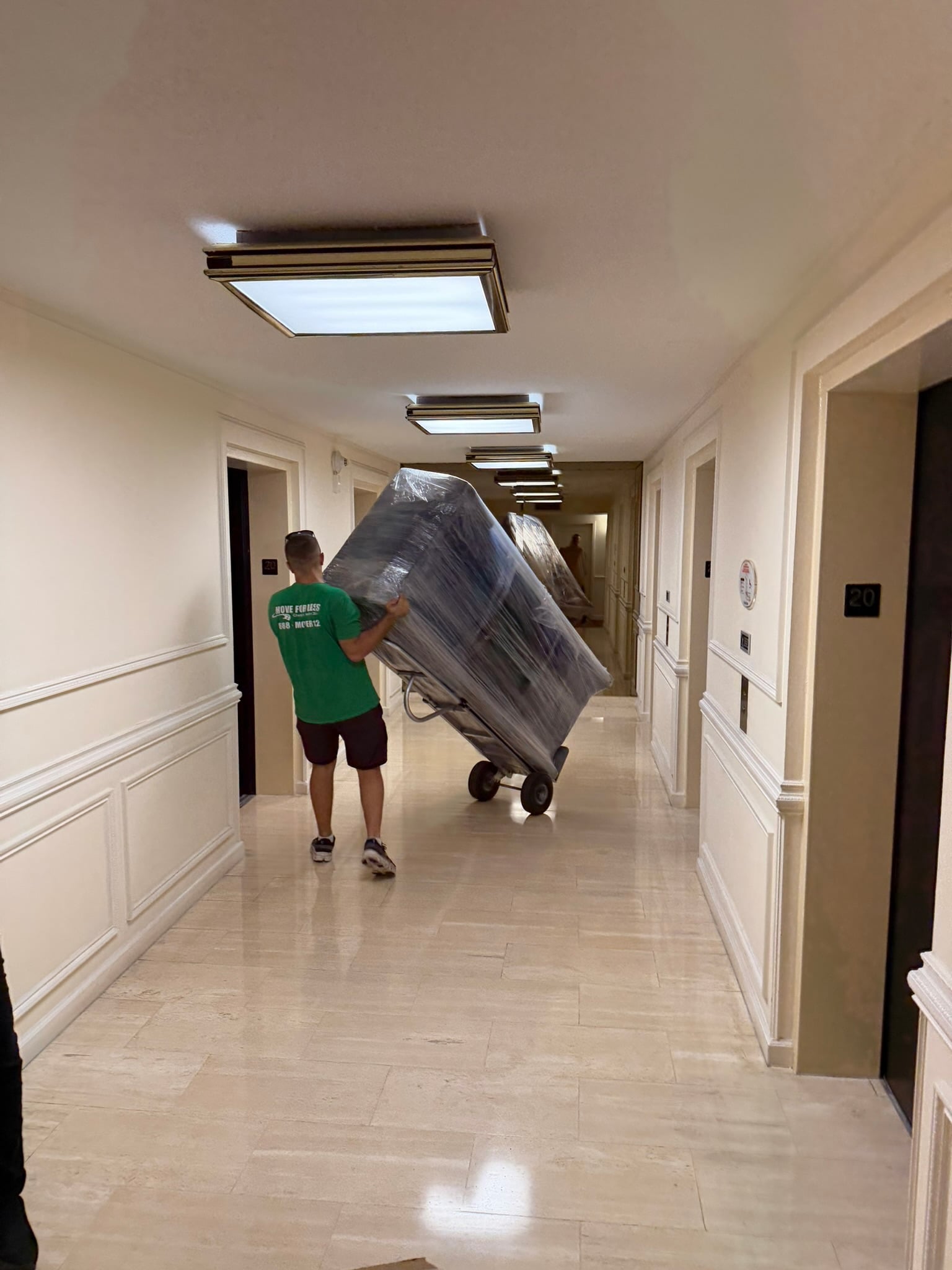
Hardware is bagged and labeled by piece, not pooled into one container. Modular components are marked so the sections go back in the same order and orientation. Finished panels, glass, stone and metal are separated and protected according to what they are rather than wrapped together. Padding goes against the finish first, with any plastic layer over the top of that padding and never in direct contact with lacquer, veneer or leather. Where a top separates from its base, the two travel as separate items, and our guide to packing glass, marble and mirrors explains why carrying orientation matters as much as padding.

Where a piece does not need to come apart, it does not. Unnecessary disassembly adds hours to the bill and adds risk to a piece that was fine as it was.