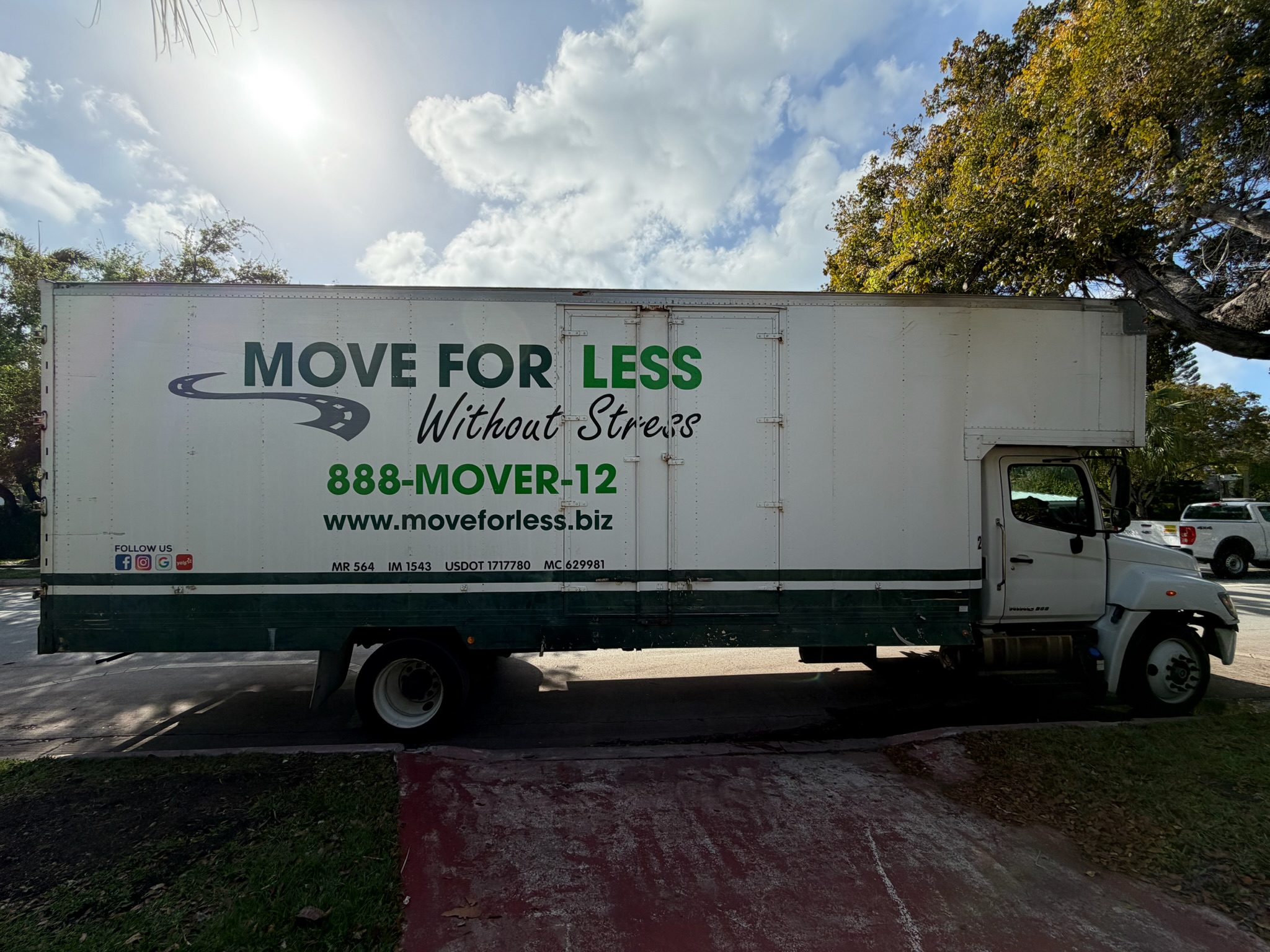


Moving from Miami to Atlanta is roughly 660 to 680 miles up I-75, and about 9.5 to 11 hours of actual driving. That makes it one of the shortest long-distance routes out of South Florida and the one where a firm delivery date is realistic rather than a window. The complications on this route are not in the transit. They are in what Georgia asks of you in your first 30 days, and in where a full-size truck can physically stop once it is inside the city. We have been running this corridor since 2007. Request a free quote to get started.

The Georgia Tax Bill Nobody Budgets For

Georgia charges a Title Ad Valorem Tax when you title a vehicle, and new residents pay 3 percent of the vehicle’s fair market value. On a car valued at $30,000 that is roughly $900, due at the county tag office within 30 days of arriving. Two vehicles roughly doubles it.
Florida has no equivalent, so this is the line item that catches almost every household moving north on this route. Budget for it before you leave Miami rather than discovering it at the counter. The standard Georgia rate for existing residents is 7 percent, so the new-resident rate is a concession, but it is still real money in your first month.

Get the License Before the Tag Office

Georgia gives you 30 days from becoming a resident to register your vehicle and 30 days to get a Georgia driver license. Both clocks run at the same time, but the order is not optional, because the Department of Revenue requires a valid Georgia license or ID before it will register a vehicle. The license appointment comes first.
Emissions is the other step. Thirteen metro counties require a passing emissions inspection before registration, including Fulton, DeKalb, Cobb, Gwinnett, Clayton, Cherokee, Coweta, Douglas, Fayette, Forsyth, Henry, Paulding and Rockdale. If you are landing anywhere in the core metro, assume you need it. The three most recent model years are exempt, and so are vehicles 25 model years or older. You will also need Georgia liability insurance on file, plus the registration and title fees.

What a Miami to Atlanta Move Costs

We build the figure from your inventory, the mileage and the access at both ends, then put it in writing before the truck is booked. Because the transit on this route is short, delivery timing is predictable enough to coordinate with a building’s loading dock reservation, which is a genuine advantage over the longer corridors. The variables that move the figure here are shuttle service for intown streets a full-size truck cannot work, long carries for deep lots and steep driveways, and stair carries in bungalows and walk-ups. Request a free quote and we will confirm the delivery date alongside the number.

Timing the Drive Around Atlanta Traffic

Through trucks that are not stopping in Atlanta are banned from the I-75, I-85, I-20 and SR 400 core and must use I-285, the 64-mile perimeter loop, and the restriction is well signed and heavily enforced.
The metro carries eight of the country’s top 100 truck bottlenecks. I-285 at I-85, known as Spaghetti Junction, ranks third nationally at an average of 35 mph, and I-75 at I-285 North, I-20 at I-285 West and East, I-285 at SR 400 and the Downtown Connector all appear on the same list. The Connector, where I-75 and I-85 merge through downtown, is the shared segment for most intown deliveries. The practical consequence is that a mid-morning arrival works and a truck that misses a 10am dock booking can lose two hours to the afternoon crawl.