
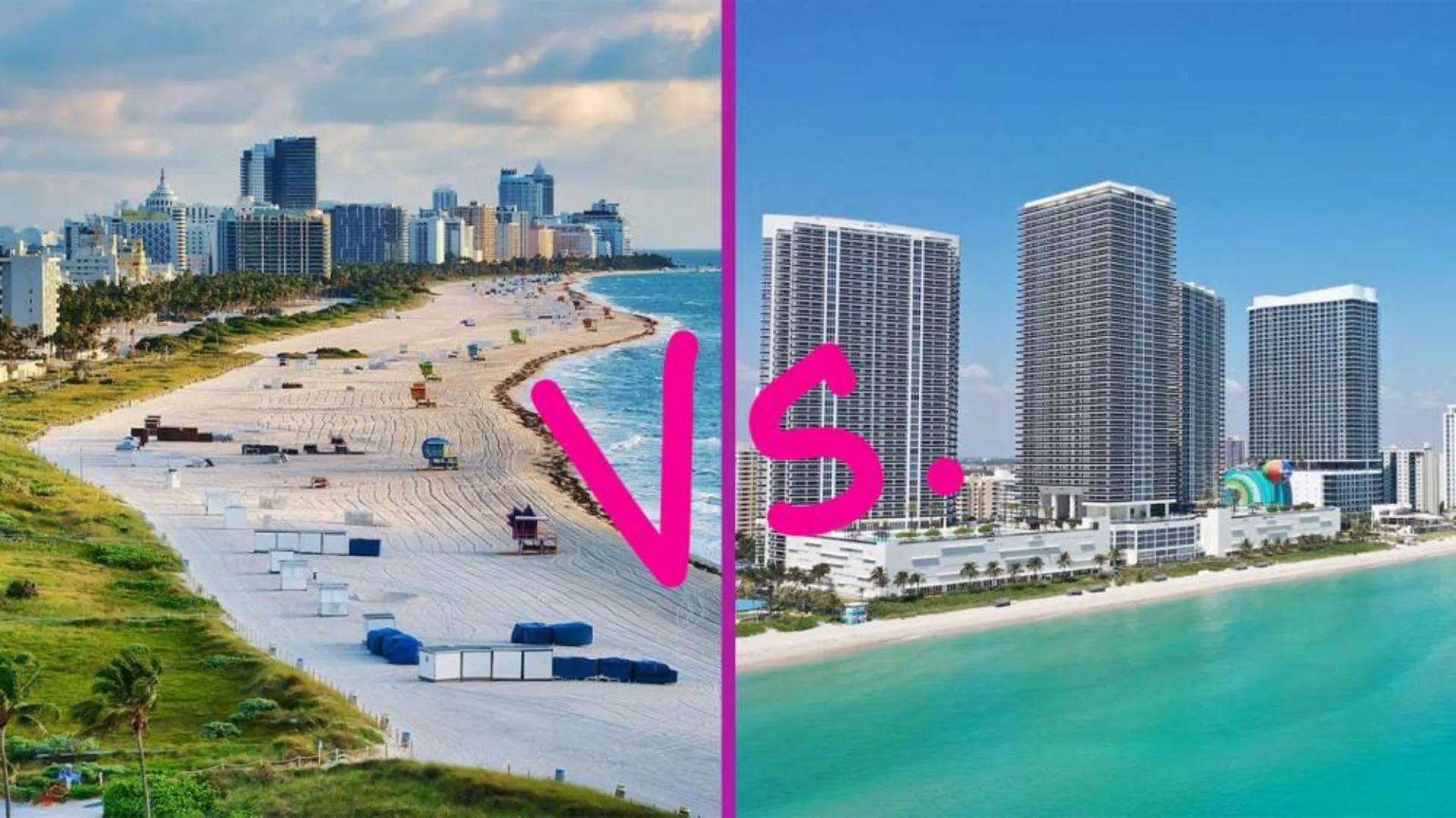
A Detailed Comparison: Hallandale Beach vs. Miami Beach
If you’re undecided about whether to make your new home in Hallandale Beach or Miami Beach, you join a large group of people also grappling with this choice. Both locations are hot spots in Florida, coveted for their sun-drenched beaches and rich cultural experiences. Deciding between Hallandale Beach vs. Miami Beach is no small task, which is why this blog post aims to shed light on key aspects of each city. We’ll also address frequent questions people often have when considering these two places. After reading this, you’ll be better equipped to make an informed decision. And if you’re in need of moving companies in Florida to facilitate your relocation, there are plenty of reputable options to help you out.
What Are the Main Differences Between Hallandale Beach and Miami Beach?
Hallandale Beach and Miami Beach are both located in the southeastern part of Florida, along the Atlantic Ocean. They are about 15 miles apart from each other, which means that you can easily visit both of them if you want to explore different options. However, they also have some significant differences that make them unique and appealing to different types of people.

Hallandale Beach
Hallandale Beach is a compact coastal city with a population just over 40,000. Daily life moves at a slower pace. Streets are quieter. Residential towers sit closer together, which keeps errands short and commutes predictable. Housing costs remain lower than most beachfront cities in South Florida, especially for condos built in the 1970s through early 2000s. Many buildings include parking and basic amenities without luxury-level HOA fees. The city sits directly between Hollywood and Aventura. Fort Lauderdale is about 20 minutes north. Miami Beach is roughly 30–40 minutes south, depending on traffic.
This location makes Hallandale Beach attractive for people who want beach access without paying premium prices. Gulfstream Park anchors the local entertainment scene with dining, retail, and events year-round. Outside of Gulfstream, nightlife stays limited and low-key. Public transit access exists but most residents rely on cars. US-1 and I-95 handle the bulk of traffic. The population skews older, with a higher percentage of retirees and seasonal residents. For people prioritizing budget control, calm neighborhoods, and proximity to larger cities, moving to Hallandale Beach often makes sense.
Miami Beach
Miami Beach is larger, denser, and globally recognizable. The population hovers near 90,000, but daily population swings higher due to tourism. The city runs fast. Traffic is heavier. Parking is limited. Housing costs are significantly higher, driven by demand, oceanfront zoning, and newer luxury developments. Rent and HOA fees often surprise newcomers, especially in South Beach and Mid-Beach towers. The city’s identity centers on culture, nightlife, and tourism. Art Deco District defines South Beach with preserved 1930s and 1940s architecture, drawing visitors year-round.
Restaurants, clubs, galleries, and hotels operate late and stay busy. Employment opportunities concentrate in hospitality, real estate, healthcare, media, and tech-adjacent roles tied to Miami’s broader business growth. Commutes can be challenging. Causeways funnel traffic in and out during peak hours. Many residents choose Miami Beach specifically for career access, networking, and lifestyle exposure. For professionals targeting income growth, visibility, and industry connections, moving to Miami Beach for a job aligns with long-term career positioning, even with higher monthly costs.
Which One Is Better for Families With Children?
If you’re planning a move to Florida and have a family, choosing the right city is crucial for your children’s well-being and happiness. There are multiple factors to weigh, such as educational opportunities, community safety, availability of parks, and a wide array of activities for kids. Each city presents its unique pros and cons, and your decision will likely hinge on what’s most important for your family. Read on to dive deeper into the comparisons between Hallandale Beach vs. Miami Beach to help make your decision an informed one.

Schools
Education quality is a key factor for families. Public schools around Hallandale Beach are part of Broward County Public Schools. Hallandale High School serves grades 9–12 with about 1,067 students. Local data show moderately average performance, with mixed test scores and limited district rankings compared with larger districts nearby. Statewide rankings place schools in Hallandale Beach well below the top tier for Florida.
Miami Beach falls under Miami-Dade County Public Schools, one of the largest districts in the U.S. Miami Beach Senior High School has about 2,168 students, with roughly 56 percent reading proficiency and 35 percent in math, an 87 percent graduation rate, and average SAT/ACT ranges that align with state norms. It ranks around #107 out of 218 Florida high schools.
Overall, Miami Beach provides more school variety and higher average performance metrics. Families prioritizing academics often lean this way, and Miami Beach movers regularly handle relocations tied to school enrollment timing.
Safety
Hallandale Beach records roughly 3,000–3,200 total crimes per 100,000 residents annually. Violent crime rates typically land just under 5 incidents per 1,000 residents, while property crime makes up the majority of reported cases. Crime tends to be more concentrated in specific corridors rather than evenly spread.
Miami Beach reports higher overall incident counts due to population density and tourism. Violent crime rates average around 5–6 incidents per 1,000 residents, while property crime remains elevated, particularly in South Beach and Mid-Beach. Seasonal fluctuations play a role, with higher volumes during peak tourist months.
Neither city qualifies as low-crime. Hallandale Beach is often viewed as more predictable on a neighborhood level, while Miami Beach sees wider swings tied to tourism. Families relocating often rely on experienced movers in Hallandale Beach or Miami Beach to manage logistics efficiently and reduce stress during the transition.
Parks
Miami Beach operates one of the denser park systems in South Florida. The city manages more than 40 park and recreation facilities, including major beachfront parks, athletic complexes, and community centers. Large parks such as Lummus Park and South Pointe Park provide open green space, walking paths, and direct beach access. Overall park coverage is estimated around 15% of city land area.
Hallandale Beach maintains approximately 15–18 smaller parks and recreation sites. These include neighborhood playgrounds, athletic fields, and oceanfront access points. Total green space coverage is closer to 4–5% of city land. Parks are more localized and designed for nearby residents rather than citywide gatherings.
Families who value larger parks and varied outdoor programs tend to prefer Miami Beach. Relocating there often involves coordinating with moving companies in Miami Dade that are familiar with high-rise access and beachfront zoning.
Activities
Hallandale Beach focuses on quieter, community-based recreation. Activities center on the beach, local parks, youth sports leagues, and seasonal city events. Entertainment options are limited but family-oriented, with fewer late-night venues and lower crowd density. The pace suits households that prefer routine and minimal congestion.
Miami Beach offers a broader activity range. Families have access to organized youth programs, water sports, cultural events, festivals, and nearby museums. Public programming runs year-round, and amenities are concentrated within a compact area. The trade-off is higher traffic, noise, and cost.
For families comparing lifestyle variety head-to-head, Hallandale Beach vs. Miami Beach often comes down to calm versus choice. Local movers in Florida handle frequent relocations between the two, especially for families adjusting priorities as children grow.

Which One Is More Affordable and Offers More Value for Money?
Financial considerations are often a top priority when planning a move to Florida, And it is very important if you are wondering which location—Hallandale Beach vs. Miami Beach—provides better value without draining your wallet. Key elements like cost of living, housing expenses, and average income in each area can greatly influence your decision. The following breakdown will offer insights into the economic aspects of life in both cities, helping you make a more informed choice.
Cost of Living
If you’re weighing affordability in your decision between Hallandale Beach vs. Miami Beach, the latest cost-of-living data still shows a clear and consistent gap. Hallandale Beach remains the more budget-friendly option across most everyday categories, while Miami Beach reflects premium pricing tied to density, tourism, and insurance costs.
Based on updated composite indexes, Hallandale Beach now carries an overall cost of living index of 121.9, compared to 158.6 in Miami Beach. That makes Hallandale Beach approximately 23.1% cheaper overall. Choosing the lower-cost city can free up monthly cash flow.
- Overall cost of living index Hallandale Beach: 121.9
- Overall cost of living index Miami Beach: 158.6
- Percentage cheaper: 23.1%
Cost of living examples (average monthly or indexed):
- Housing cost index Hallandale Beach: 138
Housing cost index Miami Beach: 201 - Average rent (all unit types) Hallandale Beach: $2,400–$2,600
Average rent Miami Beach: $3,200–$3,500 - Median utility bill Hallandale Beach: $180–$200
Median utility bill Miami Beach: $230–$270 - Electricity (1,000 sq ft condo) Hallandale Beach: $145–$160
Electricity Miami Beach: $195–$215 - Property insurance (condo average, annual) Hallandale Beach: $2,500–$2,900
Property insurance Miami Beach: $4,000–$4,500 - Transportation cost index Hallandale Beach: 108
Transportation cost index Miami Beach: 129 - Gasoline average Hallandale Beach: $3.40–$3.55 per gallon
Gasoline average Miami Beach: $3.65–$3.85 per gallon - Grocery cost index Hallandale Beach: 110
Grocery cost index Miami Beach: 122 - Dining out (mid-range meal) Hallandale Beach: $22–$26
Dining out Miami Beach: $30–$36 - Condo HOA fees Hallandale Beach: $450–$650 per month
Condo HOA fees Miami Beach: $850–$1,200+ per month

Average Salaries
When it comes to earning potential, Miami Beach pulls ahead of Hallandale Beach. With average yearly salaries amounting to $69,500, you will find that income in Miami Beach is 24.6% higher compared to the $55,800 average in Hallandale Beach. The higher salary could also help you afford one of the storage units Miami moving and storage companies offer.
- Average salary in Hallandale Beach: $55,800
- Average salary in Miami Beach: $69,500
- Percentage higher: 24.6%
Which one has more cultural diversity and entertainment options?
Exploring diverse cultures and entertainment options can be a compelling reason to relocate. As you weigh the merits of Hallandale Beach vs. Miami Beach while planning your move to Florida, elements such as demographics, languages, cuisines, and nightlife may feature prominently in your criteria. In the sections that follow, we delve into these aspects to help you make an informed choice.
Demographics
When it comes to the demographic makeup of Hallandale Beach vs. Miami Beach, Census data provides valuable insights. Miami Beach boasts a more racially diverse community, including a broader array of ethnic backgrounds. For those seeking a multicultural environment, Miami Beach could be the more appealing option.
- Racial composition in Miami Beach: 41% White, 55% Hispanic or Latino, 5% Black or African American, 3% Asian, 6% Other/Mixed
- Racial composition in Hallandale Beach: 30% White, 43% Black or African American, 22% Hispanic or Latino, 2% Asian, 3% Other/Mixed
Languages
If language diversity interests you, Miami Beach and Hallandale Beach also differ in this regard. Miami Beach has a more linguistically diverse population, including a higher percentage of Spanish, Portuguese, French, and Russian speakers. For those eager to immerse themselves in a multilingual setting, Miami Beach might better serve your needs.
- Most common languages in Miami Beach: English (39%), Spanish (41%), Portuguese (6%), French (4%), Russian (3%)
- Most common languages in Hallandale Beach: English (58%), Spanish (19%), French Creole (9%), Russian (5%), French (3%)

Which One Is Closer to Other Popular Destinations in Florida?
If you are moving to Florida with a desire to explore other popular destinations in the state, you might be wondering which city is closer to them. There are several factors that you should consider when making this decision, such as distance, travel time, and transportation.
Distance to Popular Destinations
When comparing Hallandale Beach vs. Miami Beach, proximity to other popular Florida destinations is an important factor. According to Google Maps, Hallandale Beach is generally closer to these places. So, if minimizing travel distance and fuel costs is high on your list of priorities, hiring Broward County movers and moving to Hallandale Beach may be the more suitable location for you. For instance:
- Distance from Hallandale Beach to Orlando: 215 miles – 3 hours and 45 minutes
- Distance from Miami Beach to Orlando: 236 miles – 3 hours and 40 minutes
- Distance from Hallandale Beach to Tampa: 253 miles – 4 hours and 15 minutes
- Distance from Miami Beach to Tampa: 279 miles – 4 hours and 10 minutes
- Distance from Hallandale Beach to Key West: 159 miles -3 hours and 25 minutes
- Distance from Miami Beach to Key West: 165 miles – 3 hours and 20 minutes

Transportation Options
When it comes to transportation, Miami Beach provides a broader range of choices, adding another layer to the Hallandale Beach vs. Miami Beach comparison. Not only can you find common options such as buses and taxis, but Miami Beach also offers trains, ferries, and planes. Conversely, Hallandale Beach primarily offers basic options like buses, taxis, and ride-sharing services. Here’s a detailed list:
- Miami Beach options: buses, trains, taxis, Ubers, Lyfts, car rentals, bikes, scooters, ferries, planes
- Hallandale Beach options: buses, taxis, Ubers, Lyfts, car rentals, bikes, scooters
Making the Choice Between Hallandale Beach vs. Miami Beach
Deciding between Hallandale Beach and Miami Beach depends on various factors, including distance to popular destinations, travel time, and transportation options. If you prioritize shorter distances and want to save on fuel, Hallandale Beach could be your go-to. On the other hand, if quick travel times and a multitude of transportation options are essential for you, Miami Beach stands out as the superior choice. Both cities offer unique advantages, making the Hallandale Beach vs. Miami Beach debate complex yet intriguing. Ultimately, your decision should align with what you find most crucial for your lifestyle and preferences.